The Math Was Designed Against You

Gambling can feel personal and unfair. You make choices, place bets, and sometimes win. Over many sessions, however, most players see their balances fall. That steady decline is not a conspiracy; it is the mathematics designed into the games. Operators tune odds, payout schedules, and product features so a small percentage of every stake is retained. Understanding how that percentage works, why speed matters, and what regulators now require will help you make clearer decisions and set practical limits.
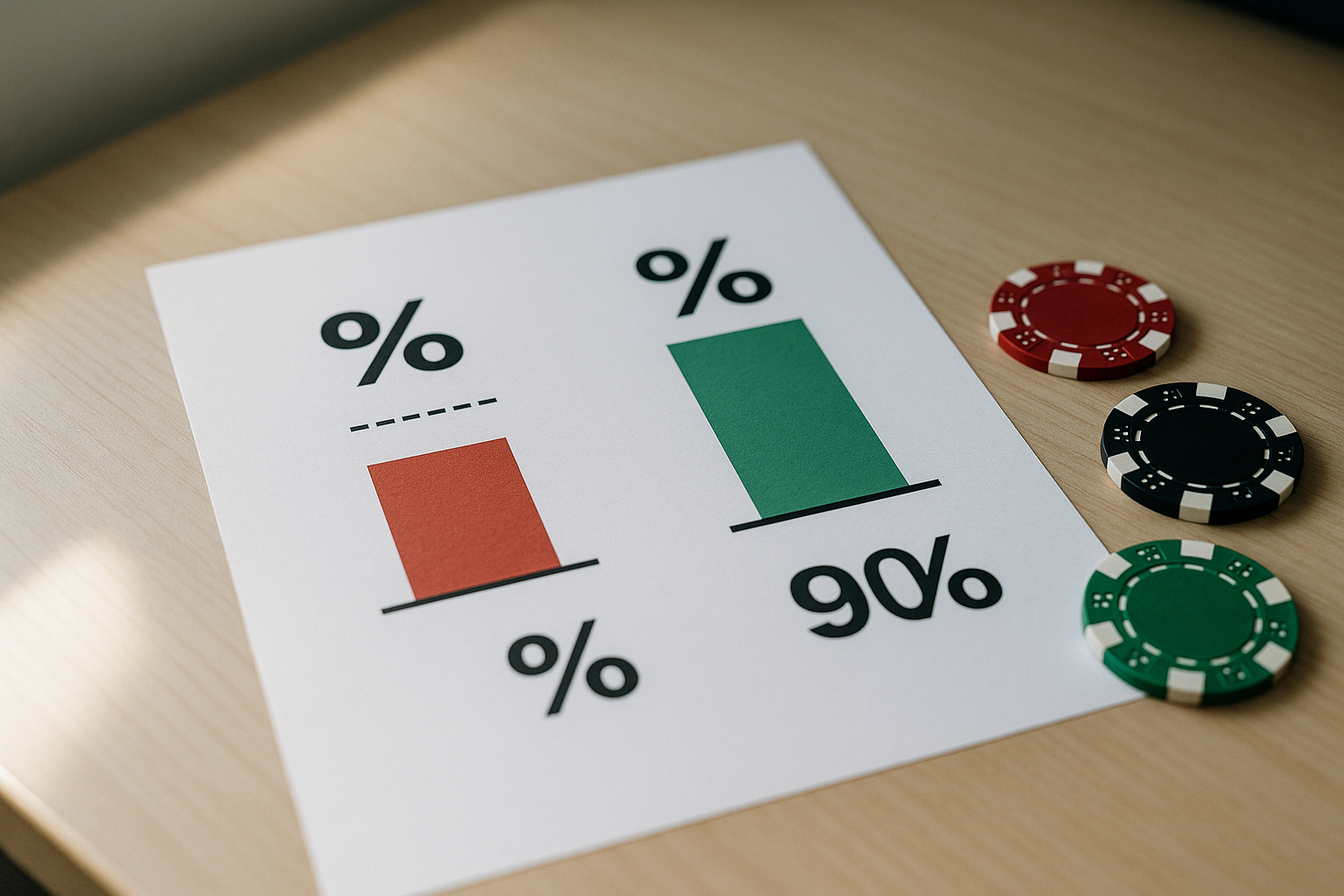
Why games feel ‘rigged’
At a basic level, the house edge is the average share of each bet that the operator keeps. It can be small for some games and larger for others, but it is steady. Over thousands of bets the operator’s edge turns randomness into predictable revenue. Short sessions are noisy: someone can win big in a handful of spins, while another player can lose repeatedly. Those short-term swings are part of normal variance and do not change the long-run expectation. When a game is designed to be fast, those swings happen more often, which makes the experience feel more dramatic and more personal.
Design choices amplify psychological effects. Near-miss animations, celebratory audio, bright lights, and small frequent payouts can make you feel like you are progressing even while your net position is falling. These features are not accidental. They are deliberate product decisions that increase engagement and the number of bets placed per unit of time. More bets per minute mean more opportunities for the edge to act, and that is how a small percentage becomes a steady drain on many players' bankrolls.
RTP and house edge in plain English
Return to player, or RTP, is a long-run percentage that describes how much a game returns to players on average. It is calculated over a very large number of plays and should be treated as a planning figure rather than a session guarantee. Think of RTP as climate rather than weather: today’s session can be wildly different from the long-run number, but over months and millions of spins the average will converge toward the published statistic.
Designers describe incentive systems in layers to show how individual features lead to overall outcomes. One short explanation of layered platform design and incentive flow appears in a Marpole whitepaper section that outlines core pillars and how rules shape behaviour: Marpole whitepaper – Three Pillars. That treatment uses the phrase the economy of truth to describe how clear incentives and transparent rules change what people do. The same idea helps explain why operators tune RTP, speed, and payout schedules to meet a target margin.
Use RTP as a tool for planning. Before you play, check the published RTP and decide how long you will play and how much you will risk. Do not treat RTP as a promise for a single session; treat it as a baseline for responsible choices.
Speed compounds losses
How fast you can place bets directly changes how quickly the house edge acts on your money. Faster play equals more bets per minute, and more bets per minute mean the edge gets more chances to extract its share. Regulators in Great Britain have recognised that high-velocity play increases harm and have introduced product standards to slow play and give players time to reflect. The UKGC’s responsible product design standard explains minimum per-cycle timing and other throttles intended to curb rapid-fire betting: UKGC RTS 14 – Responsible product design (Great Britain).
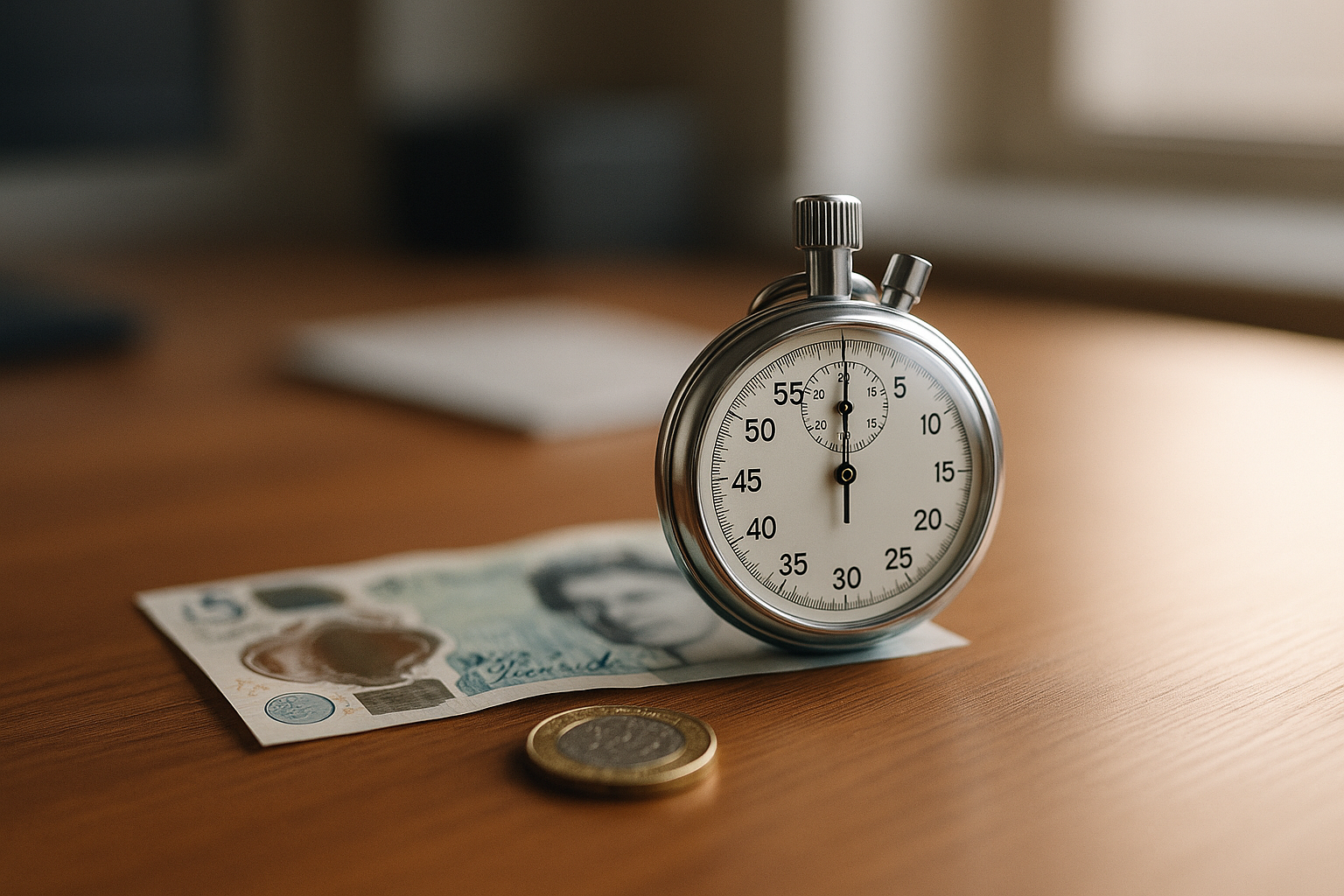
To make this concrete, compare a turbo mode that allows one spin per second with a throttled mode that enforces a 2.5 second wait between spins. In ten minutes the turbo mode permits many more spins, giving the edge far more opportunities to reduce your balance. The throttled mode reduces the number of events and creates pauses where you can consider whether to continue. That behavioural space is the point of timing rules: they slow the pace so players can notice losses and make deliberate choices rather than reacting in the moment.
Stake caps and your wallet
Limits on maximum stakes change how much you can lose in a single bet and how fast your bankroll can evaporate. Great Britain’s guidance sets maximum online slot stakes at £5 for players aged 25 and older and £2 for players aged 18 to 24. These caps reduce the scale of single-event losses and are intended as one of several consumer protections: UKGC online slots stake limit guidance (Great Britain).
Caps do not change the fundamental math: every stake is still subject to the house edge. What caps do is limit how severe a single unlucky run can be. For a new player or someone who struggles with budgeting, that headroom can be meaningful because it gives more time to notice loss patterns and step away. The practical approach is to treat caps as one protective measure: combine them with personal time limits, deposit limits, and auto-pauses so you have multiple brakes if losses mount.
Sports betting’s quiet margin
Sportsbooks work differently from slot machines. Instead of reporting an RTP, books set odds so a small percentage of the total money wagered is retained as profit. This retained percentage is commonly called the hold. Even when many bettors win and lose in aggregate, the book still earns because payouts are calculated with that embedded margin. On many markets the hold is modest, but across millions of bets those small margins become large revenues.
Exotic bets such as parlays or same-game combinations typically carry bigger hidden margins than single bets. They can be fun for the payoff, but they are generally poorer value over the long run. When you are planning a bankroll, treat complex combos as entertainment rather than a reliable strategy to beat the margin.
Spot the ‘wins’ that aren’t
Some games celebrate small returns that are less than the stake you risked. Designers can mask net loss by using celebratory feedback for any positive return, even when that return is smaller than what you staked. Near-misses make players feel like they almost won and can increase the urge to continue. Clear displays of net position, slower pacing, and straightforward session summaries reduce the ability of design features to mislead you about your true outcome.
Good product design gives honest feedback: show net gains and losses clearly, avoid disguising small returns as meaningful wins, and make it easy to review a session with a simple summary. Those practices make it easier to decide whether to continue and reduce impulsive escalation after losses.
Simple rules to keep the edge in check
Practical guardrails help you keep control. Decide a money limit and a time limit before you play. Set reminders or alarms to enforce breaks. Avoid turbo modes and autoplay features that raise spins per minute. Treat RTP or published hold percentages as long-run statistics, not guarantees for your session.
Prefer platforms that publish clear odds and session records, offer easy tools to pause or self-exclude, and provide transparent reporting you can verify. Use regulatory protections actively: timing rules and stake caps work best when paired with personal limits and a deliberate habit of checking net position.
FAQs
What is house edge and how does it work?
House edge is the built-in percentage that an operator retains from bets over time. It explains why operators are profitable across many players and plays.
Does RTP mean I’ll personally get that percentage back?
No. RTP is a long-run average across many plays. Individual sessions can be much better or much worse than the published number.
Why does slowing spins to 2.5 seconds matter?
Slower spins reduce the number of bets you can place per minute, which limits how quickly the house edge erodes your bankroll; the UKGC’s RTS 14 explains the timing and design rationale for these limits.
What are the £5/£2 online slot stake limits in Great Britain?
The guidance sets maximum online slot stakes at £5 for players aged 25 and over and £2 for players aged 18 to 24; consult the regulator page for full context.